

A green idea often begins with a simple sentence: “This could work differently.” Someone notices how much single-use packaging a school goes through each day, how difficult it is to maintain greenery in the neighbourhood, or how overheated a shared space becomes in summer. That observation is not yet a solution, but it is an important beginning because it connects the problem with a place, people and habits that young people know well.
The first step is not to find a grand and perfect idea immediately. It is more useful to describe precisely what is actually happening. Where does the problem arise? Who does it affect? How often does it occur? What has already been tried? When young people ask these questions, a broad issue such as waste, water or energy gains clearer boundaries and becomes something that can be discussed without guesswork.
A good idea begins with a good question
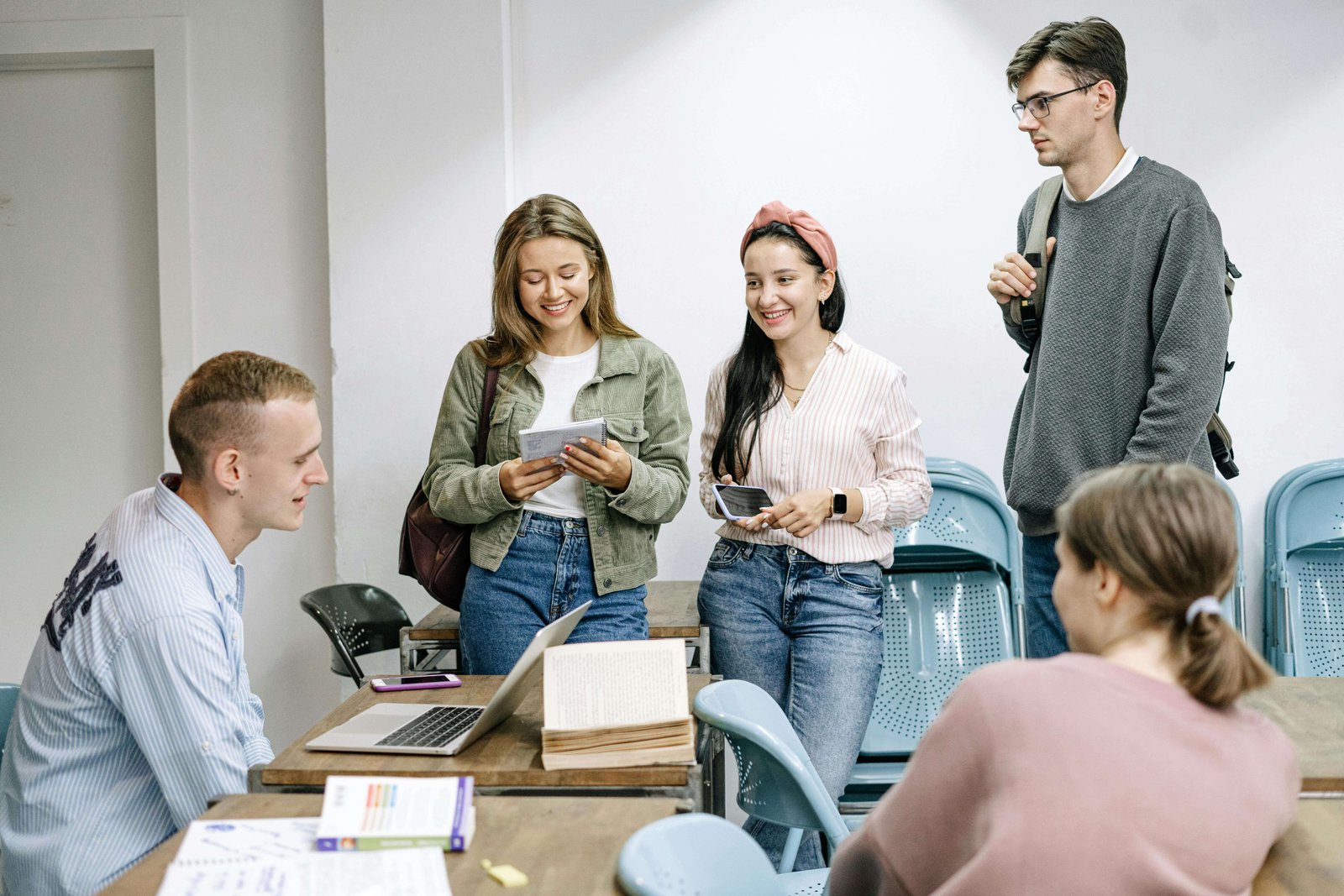
Within “EcoRise”, thinking about green challenges relies on curiosity and cooperation. One person may notice the problem, another bring a different experience, a third examine how the space works, and a fourth ask a question that had not occurred to the group. The idea then grows not around the loudest suggestion, but through different perspectives adding to one another.
The path from idea to solution is not a straight line: the question becomes more precise, the proposal is tested, and every attempt shows what needs to change.
An important part of the process is distinguishing a wish from a possible first step. The sentence “I want a cleaner neighbourhood” describes a direction, but it does not yet show what the group can do. A more concrete question might be where waste most often accumulates, why existing disposal points are insufficient, or how information could reach the people who use the space. Only then do proposals emerge that can be compared.
Young people often bring an advantage that is difficult to gain from an office or a ready-made plan: direct experience. They know the routes they take to school, where their peers gather, which messages people genuinely notice and what will probably be ignored. This does not mean every first idea must be good. It means their knowledge of everyday life is an important part of creating a response that makes sense in a particular setting.
The next step is testing assumptions. A short conversation with people who use the space, observing habits for several days, making a sketch, running a small survey or creating a simple trial model can show whether the group has understood the problem correctly. Sometimes the real obstacle is not where everyone expected it to be. Changing direction is then not a failure, but evidence that the idea is developing from what has been learned.
A solution grows through small trials
Instead of planning a major change immediately, it is useful to create a version that can be tested quickly. If the idea is to organise waste separation better, the first attempt might be one clearly marked point and a period of observing how people use it. If the challenge is an overheated space, the group can map the most exposed areas and compare different proposals for shade and greenery. A smaller scale makes feedback easier to see.
This approach teaches that a sustainable solution is not simply one that sounds appealing. It needs to be understandable to the people who will use it, suited to the place and simple enough to continue. It also matters who will look after the idea once it has been presented, how progress will be followed, and what will happen if the first plan does not work as expected.
Cooperation remains essential throughout. One person may be better at research, another at presenting the proposal clearly, someone else at spotting practical obstacles, and another at connecting the group with teachers, neighbours or organisations. When roles remain open, more young people can find a way to contribute, even if they did not initially see themselves as someone who “has ideas”.
The journey from idea to solution is therefore not driven by one great moment of inspiration. It follows a series of careful steps: noticing, asking, listening, testing, adapting and trying again. Through that process, green challenges stop being distant subjects, while young people become people who can turn their experience into a thoughtful and shared response.