

Water is so present in everyday life that we often notice it only when it is unavailable, when we use more than planned or when weather conditions disturb the usual rhythm. Climate, on the other hand, can feel like a large and distant subject, filled with concepts that are not easy to connect with one school day, university responsibilities or life in a neighbourhood. The future may sound even more abstract. That is exactly why a conversation linking these topics matters: it helps us see their connections.
When water is discussed only as a natural resource, it is easy to miss how much it affects community health, food production, the character of shared spaces, daily habits and the way settlements are planned. When climate is presented only through global images, young people may feel that the subject is too large for questions that come from their own experience. “EcoRise” therefore creates space to translate major concepts into a conversation that begins with what is familiar.
Conversation begins with what we can observe
Major environmental topics become easier to understand when we connect them with the water we use, the spaces we move through and the changes we already notice around us.
One simple question can change the direction of a conversation: where do we use water throughout the day without giving it much thought? From morning routines to school, university, sport, the care of green spaces and food preparation, the answer quickly shows that water is not a separate topic. It is part of an entire system of daily life. The next question may be what changes when summers become warmer, dry and rainy periods alternate, or a shared space requires a different kind of care.
Such a conversation does not have to offer a final solution immediately. Its first value is that it teaches young people to observe connections, ask more precise questions and distinguish between what they know and what still needs to be explored. Instead of a general message about “protecting nature”, the subject takes on a more concrete form: how do we use water, what could we monitor better, where does avoidable loss occur and who should take part in the discussion?
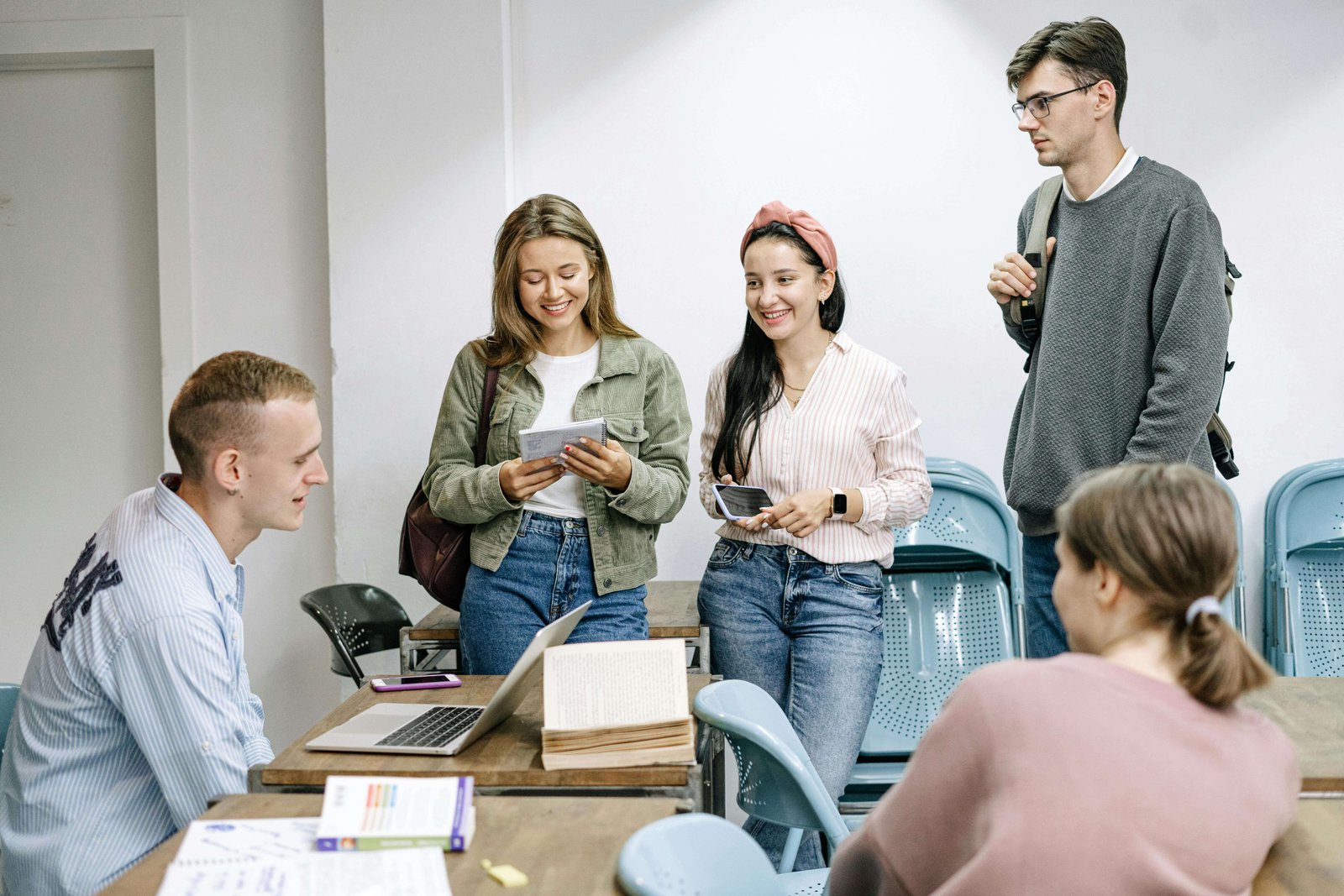
It is important for that conversation to include different experiences. One person comes from a place where water is easily available, another has noticed difficulties during dry periods, while someone else is considering for the first time how water returns to its natural cycle. When these experiences are heard together, the topic becomes richer and closer to real life. Young people are no longer only an audience receiving finished messages, but participants contributing questions and examples.
The future is easier to imagine through concrete choices
A conversation about the future is not useful if it remains only a series of warnings. It becomes much more meaningful when it creates space for imagining: how could a school use water more carefully, how could a public space cope better with heat, what could a student group monitor, and how could a neighbourhood exchange information and ideas? These questions do not make climate challenges smaller, but they bring them closer to the people who will take part in responding to them.
Within “EcoRise”, connecting water, climate and the future has another important dimension: it links knowledge with cooperation. One person may identify a problem, another explain it more clearly, a third suggest a way to monitor it, and a fourth involve the community. Sustainable thinking then becomes not an individual test with one correct answer, but a process in which an idea is examined, expanded and adapted to real conditions.
When young people have room to discuss these subjects without oversimplification and without the feeling that everything has already been decided, the future stops being only something that will happen. It becomes a topic they can think about, learn about and shape together. Water is a good starting point because it is familiar to everyone, climate provides the wider frame, and the question of the future reminds us why the conversation should not be postponed.